
Thoughts on Attention and Aesthetics
Look here!

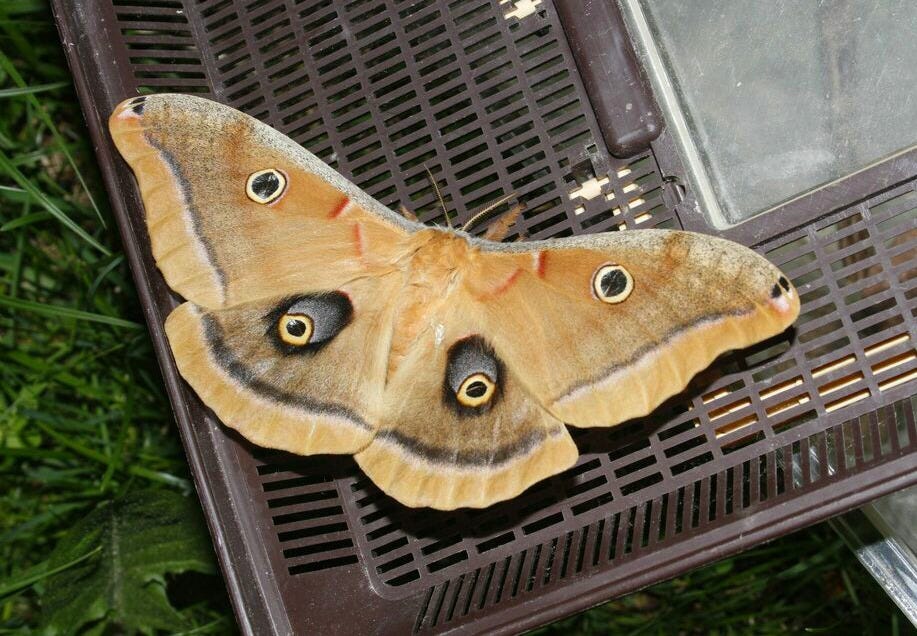
“Attention is the rarest and purest form of generosity.”
― Simone Weil, First and Last Notebooks
Attention is a fundamental social currency. I think this has always been the case, but it’s especially obvious now when we’re constantly exposed to algorithms and advertisements optimized to grab and hold onto our attention in order to monetize it. Attention is the direction in which we are orienting our mind and will. If you can control someone’s attention, you have influence over their perceptions of things. From there you can influence their opinions, beliefs, purchasing decisions… The responsibility of any creator is to be a good steward of their viewers’ attention.
However, we have all sorts of ways of managing our attention to reduce the exhaustion of having our will pulled this way and that all the time. We take mental shortcuts that we often aren’t even aware of. And these are necessary; it’s simply impossible to pay attention to every detail of every thing in our surroundings 100% of the time. If your attention got equally caught on the details of every leaf on a tree, every riplet on a wave, or every grain of sand embedded in a sidewalk, as with things more directly relevant to your life… you would starve. In communicating with other people, you could drive yourself insane by trying to decipher every subtle inflection, word choice, or movement on a face. Regulating our attention is necessary in order to function properly.
But these shortcuts also mean that we miss so much of the intricate detail of our world. One clear example of this is shown when we try to draw something. If you ask most people to draw a person, or a tree, or a horse, they will produce a simplistic version without most of the details of the real thing. This may partially be because they don’t have sufficient practice controlling a pen, but most people are probably entirely capable of writing legible letters.
I think the actual obstacle is that they only carry a minimalistic symbolic model of that object in their mind. A stick figure serves to efficiently represent the human body, while skipping over extraneous details like shoulders, hips, ears, toes, and the many angles and curves that connect those parts with each other. If you put it down on paper it doesn’t really look like a human, but it does efficiently communicate “this is a human”. In order to produce a drawing that actually looks like human, you have to pay attention to what a person actually looks like, which requires significantly more effort. When you try to draw a horse, you remember that it has a head, a body, and four legs, but perhaps you’ve never noticed which direction each joint in each leg moves, or the angles at which the head connects to the neck and the neck to the rest of the body.
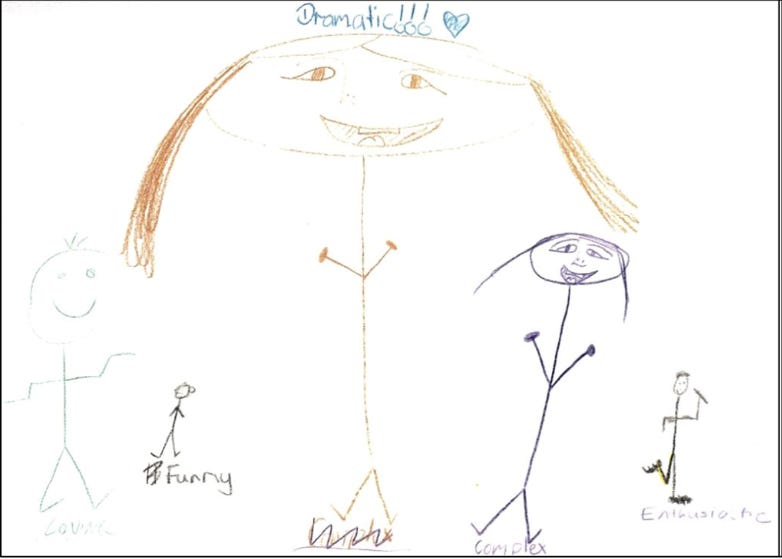
Names function in a similar way. Giving something a name allows us to package all of it under one label, so that we can communicate about that thing without having to mention extraneous details. Ents live long slow lives and can afford to belabour the details. Us humans are much more hasty. But by lumping all the details under a single word as a shortcut, we create a rut in the path that we tend to get stuck in, making it easy to forget about the details. To get out of this rut, we can make more particular names. Hence we have the very broad word “dog”, but more particular names for specific breeds, and individual names for the dogs we know personally.


The same applies to the natural world. Most people may only know a broad category like “dragonflies”. But if you get to know them better, you may come to know categories like “saddlebags” and “darners”, or particular species like Black Saddlebags and Lake Darner. With wild animals we tend not to recognize them at an individual level. From our perspective, every Lake Darner and Black-capped Chickadee is functionally identical. At that level they are distinct, distinguishable from for example Common Green Darner or Chestnut-backed Chickadee.1 But again, these names are shortcuts that enable us to skip over individual details and process only the minimum necessary amount of information for adequate communication. Generally, a name by itself communicates very little of anything of the beauty of an organism, for example.
Because our attention is finite and we need to regulate it fairly strictly in order to function, intentional attention towards something is an indicator of that thing’s value. Flowers are flashy to attract insects, and male birds are flashy to attract female birds. But if we “pay” attention to them, it is because we find value in their colours as well.
Something I’ve been puzzling over recently is whether creative works contain new aesthetic value, or if they primarily direct attention towards value that already exists in the world. If I take a photo of a dragonfly that emphasizes the intricate patterns on its body and wings, and cause the viewer to appreciate those details in new light, is the real beauty in the photo, or in the dragonfly? A beautiful piece of visual art or creative writing is a synthesis of the creator’s knowledge and experience of beauty in their life. The value that the artist provides is by consolidating that beauty and making it more accessible to us.
Energy might work as an analogy for what I’m describing. We speak of technology like wind turbines or nuclear reactors as “generating” energy. But in physics, according to the law of conservation of energy, energy can’t be created or destroyed; it can only be converted between different forms. When we “generate” energy, we are converting kinetic energy or the energy in chemical bonds into electrical energy.2 My thinking here is that creative work functions similarly to energy generation, in “creating” value by converting the subtle beauty of everyday experience into a more condensed and accessible medium.
Where this analogy might break down is that there doesn’t seem to be an upper limit on the amount of value that can be generated from a creative work. Someone can come up with a creative technological innovation out of their knowledge and experience, and if others find it valuable they may be able to convert that value into billions of dollars. Some famous paintings have sold for millions of dollars, and it’s unclear how that value relates directly to the beauty of the painting. The most famous painting in the world, Mona Lisa, became the most famous in large part because the theft of the painting in 1911 brought so much attention to it, which is unrelated to the appearance of the work.
I don’t feel comfortable saying that all of the value of creative works are derivative of outside material. But I’m not sure how to describe what the novel aspects might be. Perhaps something about the unique perspective of the artist. But then I’m not sure what unique perspective I have that isn’t just a result of my particular knowledge and experiences. Not to say that those aren’t valuable, just that I don’t know how to describe what the “spark” of a particular piece might be. Why couldn’t a large language model AI produce writing that was functionally equivalent, derived from its vast knowledge of the human experience? I don’t know. Perhaps there’s something irrational about the human experience and creative process that produces great creative insights, and being irrational is both what makes it uniquely human and what makes it hard to describe.
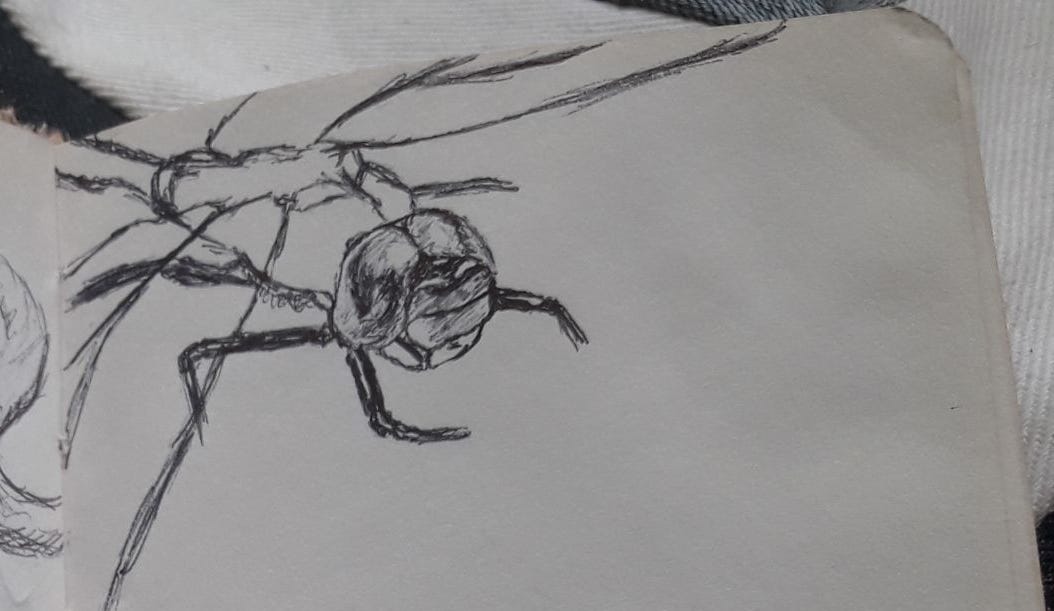
People are stingy with their attention, and direct most of it towards the basic routines of life. Most are not going out of their way to appreciate the obscure details. It takes the intentional effort of artists, scientists, engineers, etc. to find the value in the details and bring them to light for everyone else. If you know how to look, there are still a lot of new things out there to find; things which have value but have not yet been evaluated.
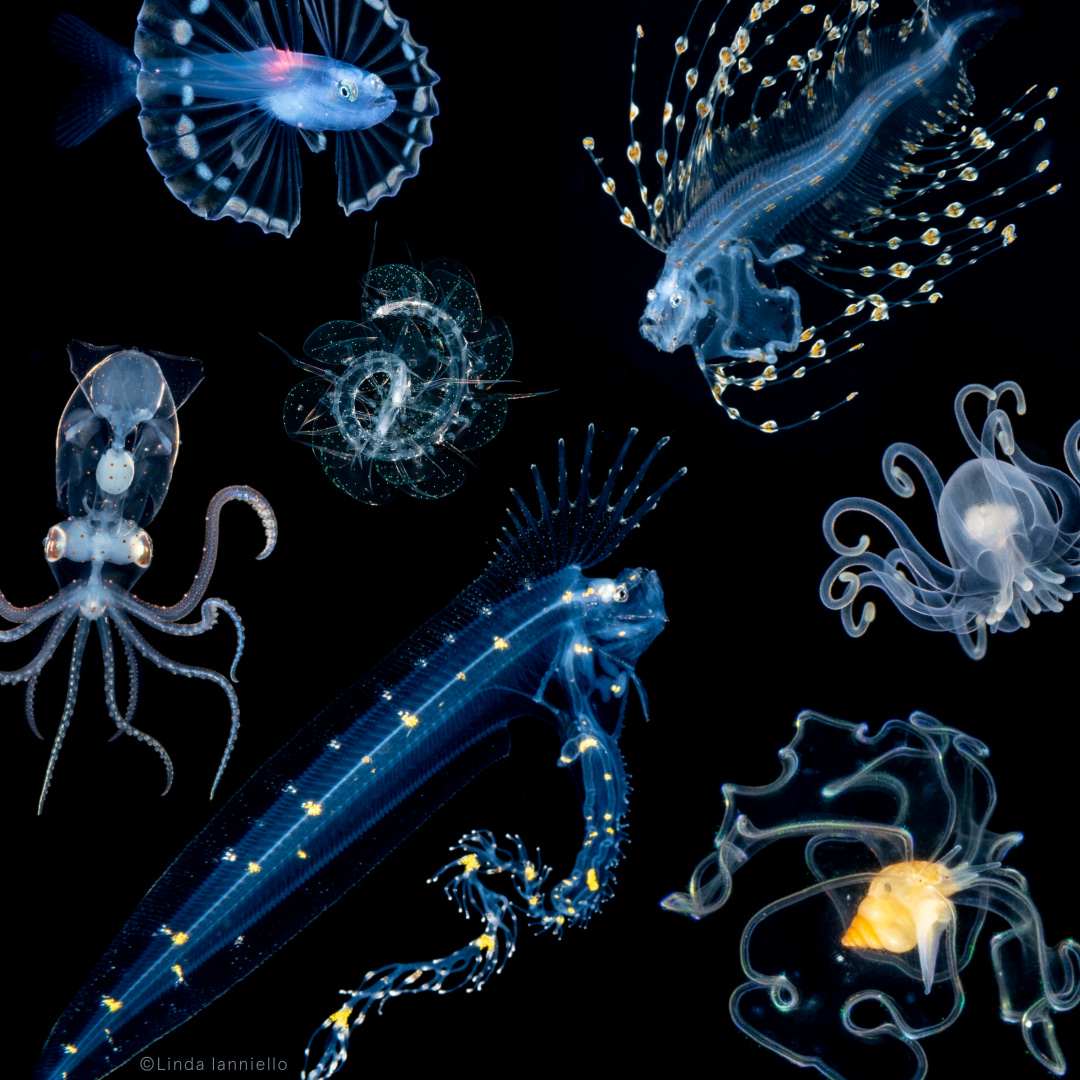
A small example of this is the sea creatures that can be found on blackwater dives. Many different kinds of small marine organisms hide out deep in the open ocean during the day, and then rise up closer to the surface to feed at night when it’s safer. Scuba divers will go on dedicated trips out to the open ocean at night to find these tiny creatures, which often feature elaborate shapes and colours. The divers will shine bright lights to attract these creatures and get incredible images of them. Some of these creatures can only be found in these circumstances and nowhere else, while others are the fragile young of what will later be more familiar large fish and crabs of coastal waters. Blackwater diving is such a particular setting, done by so few people, but the photographs that these divers capture are awe-inspiring. Not only are they valuable aesthetically, but they also provide scientific value since the ocean is so underexplored.
There are almost certainly thousands of undescribed species sitting in museum collections waiting to be formally recognized, and hundreds of thousands more out in the wild yet to be noticed by anyone, especially in tropical areas. There is beauty in those species which no human has yet appreciated. But at a smaller scale, within your own life and social circles, there is more mundane beauty being missed; not getting the attention it deserves. All we need is someone to point it out in the right way.
“Instructions for living a life:
Pay attention.
Be astonished.
Tell about it.”
― Mary Oliver, “Sometimes”
The fact that this is the level at which we meaningfully relate to species is why I favour capital letters for their names. Not only does capitalizing the name “Greenish Warbler” indicate that I’m referring to Phylloscopus trochiloides as opposed to an individual of one the many other species of vaguely green-coloured warblers in the world, but it also captures the level of relationship felt with a species. Perhaps similar to how people relate to the concepts like the Pacific Northwest, the Great Lakes, or Toyota Corollas. People are more likely to want to capitalize the names of species of mammals and birds than insects, plants, or fungi, because they tend to feel closer relationships with the former. If you spend much time observing captive parrots or wild bird species, you’ll notice that each species has distinct quirks and personalities. Birders speak of having “nemesis species”. We tend to keep track of how many species we’ve seen with higher priority than how many individuals.
Technically (if my understanding of e=mc2 is correct), the same mass of coal and uranium actually contains the same amount of potential energy, it’s just that energy is 3 million times more accessible from uranium than from coal for conversion to electricity. No idea if this has any relevance for the analogy. :P